
Over the years we have had many topics in the THP Forum about SST Pure and the process of shaft PUREing. Often polarizing, we wanted to dive in a little deeper. We went right to the source and sat down with SST Pure for another episode of The Quick Six.

THP: What is SST and where did it come from?
SST: SST stands for Strategic Shaft Technologies. The process of shaft PUREing was created by Dick Weiss after his research revealed that shafts have irregularities in their composition from the manufacturing process. This affects how the shaft performs during a swing because the forces of those irregularities affect the golfer’s ability to swing a club. Dick was able to bring his technology to the PGA TOUR, where Pros using the SST PURE have won over 2 billion dollars. It’s been more or less an open secret on the Tour for about 20 years.
THP: Can you explain the process for those that might not know about it?
SST: Put simply, PUREing a shaft is aligning the shaft to the most stable position.
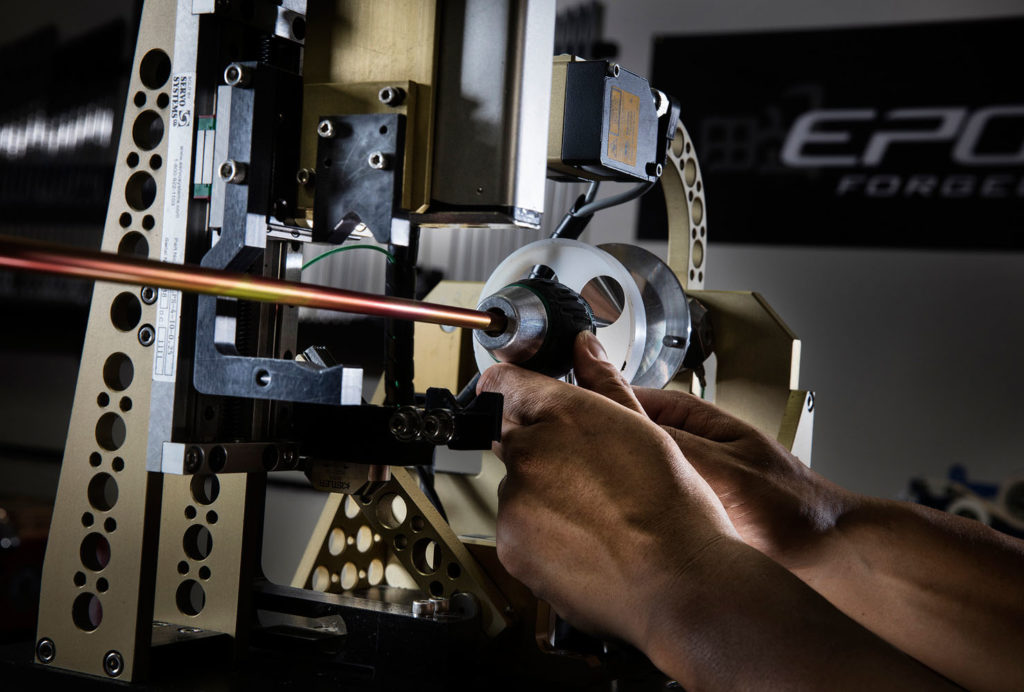
In more detail, The SST PURE machine analyzes a shaft to find the most stable plane where the oscillation of the shaft is as flat as possible. This is done by adding a weight to the tip of the shaft and measuring the shape of the shaft’s oscillation. In a default position with the shaft label facing up, the oscillation will have an oval shape. So, the SST PURE machine continually measures this oscillation shape by rotating the shaft to different positions until the oscillation shape is flat. The machine then marks the shaft so that the club builder can assemble the club with the shaft in this PURE alignment.
THP: What differences have you seen in regards to the outcome?
SST: If we apply the idea of shaft oscillation shape to a golf swing:
as the golfer swings their club with an unPUREd shaft, the shaft is moving in an oval or rounded path. This is another variable in a golf swing, an event with numerous innate variables. The result of the oval shaped path is less speed, less consistent impact, negatively affecting distance and accuracy. However, when a golfer is swinging a club with a PUREd shaft, the shaft is moving in a flatter, more consistent shape through the swing. The result is an increase in clubhead speed (1-2 mph), which leads to higher ball speed (2-4 mph), and more consistent impact on the face. These results lead to an increase in distance and improved accuracy.
We’ve tested these outcomes with robots and humans of varied skill levels with nonpartisan 3rd parties. The results speak for themselves.
THP: Visual technology is something that grabs golfers and tells them something works. This is the opposite. Will a golfer know, see or feel what has changed?
SST: A golfer who has their shafts SST PUREd will receive a printed report illustrating the oscillation shape of their shaft in both the PUREd and unPUREd positions. That’s a piece of visual evidence the golfer has to see how their PUREd shaft will perform better.
Feel is subjective and difficult to quantify. That being said, 85% of human testers picked the PUREd club over the unPUREd – the clubs were not marked – saying it felt better, felt more under control, and their mishits felt much better.
When a golfer sees that they are hitting the ball farther, it’s landing closer to their target, and scores are lower, that is hopefully all the evidence the golfer needs to know something has changed.
THP: What do you say when you hear things like this is snake oil?
SST: Just because a person hasn’t heard about something doesn’t make it not real. SST has had very little budget to grow until recent years. To pull the curtain back a little, the SST PURE machine is a very expensive tool to build, more expensive than many people pay for a car. Additionally, PUREing a shaft is not a fast process either, each shaft takes about five minutes. If every fitter and golf shop could spend the money on purchasing a machine, it would be everywhere. And if the time it took to PURE each shaft was more feasible, more would do it. We’ve spoken with major manufacturers and they know it’s real. But for them, time is money. Five minutes times one million drivers sold, you can do the math. Making that more streamlined is a solution we are working toward as we continue to grow.
The proof is out there, though. Look at the $2 billion won on Tour; that comes from many of the biggest names in golf PUREing their shafts and having success at the highest level. Look at all of the independent 3rd party testing done by human and robots. NOT one of these tests has ever been able to show that PUREing doesn’t work, but countless have. It’s as real as real gets.
THP: Fun question, without naming the shaft, what is the worst shaft you have encountered during the process?
SST: That’s hard to answer without a name, or showing oscillation graphs, or explaining the deviation and the deviation amounts defined. Suffice it to say that there have been shafts so bad when you do the initial test on the machine, they don’t even make an oval shape, they start moving vertically.
Another point, because we hear it a lot; money spent on a shaft does not correlate to not needing to be PUREd. They ALL need to be PUREd. There have been $5 shafts and $500 shafts that tested equally bad. Furthermore, shafts claiming to not have a “spine” and therefore don’t need PUREing is awful, terrible, misleading information. Most shafts never had a spine to begin with. They have irregularities that occur when the pieces of materials are layered together and pockets are created. It’s almost like a knot in a tree that can’t be bent against. From the sanding process making wall thickness vary, to the heating and cooling that happens in manufacturing, this all leads to irregularities in the shaft. The SST PURE process makes sure these irregularities are aligned so that when the shaft is installed, those irregularities are stabilizing during the golf swing, not fighting against the swing.
For more information about the process or to find a place near you that offers the service, check out their website at www.sstpure.com.





Nice read, thanks for providing.
Something I’ve always wanted to know more about, and a good job explaining it here. It’s still a cost vs value quandary for me, but something I remain curious about experiencing.
Very insightful. Thank [USER=3]@JB[/USER]. They seem to somewhat understand their service costs more than it’s perceived to be worth at this point. Hopefully they can drive the cost down.
Puring is one those things that’s been around for the longest time, and I have no idea if is snake oil or legit. I immediately have regret for not asking this when face to face with shaft designers, but it’s just something I never ever think about.
IMO the equipment could cause a bad result, but I think the odds of it being the equipment user are way more likely the culprit.
Nice Q&A thanks for sharing.
[QUOTE][I]The proof is out there, though. Look at the $2 billion won on Tour; that comes from many of the biggest names in golf PUREing their shafts and having success at the highest level. Look at all of the independent 3rd party testing done by human and robots. NOT one of these tests has ever been able to show that PUREing doesn’t work, but countless have. It’s as real as real gets. [/I] [/QUOTE]
You sold me, take my money.
Good read this morning. I don’t know if I would say it’s snake oil, and I get the results that they are speaking of, but this one is tough for me. Having sat in a room with shaft experts and manufacturers Ive heard so much from one side that I don’t know what to believe.
[QUOTE=”ddec, post: 9872904, member: 782″]
Good read this morning. I don’t know if I would say it’s snake oil, and I get the results that they are speaking of, but this one is tough for me. Having sat in a room with shaft experts and manufacturers Ive heard so much from one side that I don’t know what to believe.
[/QUOTE]
Herein lies the issue and why I so badly wanted to do this interview.
Shaft companies speak about how important fitting is, and always want their products to shine in the best light possible and do not reference Pureing. Perhaps because it could make it look as if the product is flawed, or perhaps they do not believe it be necessary or real. I don’t know the answer to that.
I have said for years that if a golfer thinks it works for them, they should absolutely have it done because of the mental side of this game. Does it work? I don’t have a definitive answer for me personally.
Great read. Nice to learn more information about a process I have been hearing about for many years but have never experienced it first hand.
[QUOTE=”JB, post: 9872905, member: 3″]Herein lies the issue and why I so badly wanted to do this interview.
Shaft companies speak about how important fitting is, and always want their products to shine in the best light possible and do not reference Pureing. Perhaps because it could make it look as if the product is flawed, or perhaps they do not believe it be necessary or real. I don’t know the answer to that.
I have said for years that if a golfer thinks it works for them, they should absolutely have it done because of the mental side of this game. Does it work? I don’t have a definitive answer for me personally.[/QUOTE]
You and I have that similar take in it. Esp the, you think it works…do it, mentality.
Great read. I’ve heard the term frequently on here but never really understood what it meant. The theory behind it resonates with me, and if it every become viable budgetarily I’d certainly consider having it done.
I guess a followup question I would want to ask is the pros that have their shafts pured, did they ask for it themselves? Or was it just done and they don’t even know?
Probably the biggest question and one with the most important answer: Has Bryson done it? What’s his take on it since he was so involved with the shafts in his clubs?
[QUOTE=”thewilderside, post: 9872924, member: 59217″]
Great read. I’ve heard the term frequently on here but never really understood what it meant. The theory behind it resonates with me, and if it every become viable budgetarily I’d certainly consider having it done.
[/QUOTE]
Im going off memory here, but it’s fairly inexpensive considering what the machines cost. I believe around $30.
[QUOTE=”MWard, post: 9872930, member: 3474″]
I guess a followup question I would want to ask is the pros that have their shafts pured, did they ask for it themselves? Or was it just done and they don’t even know?
Probably the biggest question and one with the most important answer: Has Bryson done it? What’s his take on it since he was so involved with the shafts in his clubs?
[/QUOTE]
I certainly can’t speak to all of them, but I do know that Bryson got his metal woods done. I know that shouldn’t surprise a lot of folks, but I asked him when he first got to LA Golf if he was going to and he said he already had.
[QUOTE=”JB, post: 9872931, member: 3″]
Im going off memory here, but it’s fairly inexpensive considering what the machines cost. I believe around $30.
[/QUOTE]
Well that piques my interest. Is that per club or total?
[QUOTE=”thewilderside, post: 9872937, member: 59217″]
Well that piques my interest. Is that per club or total?
[/QUOTE]
I only had it done at my driver fitting, so it was part of it, but I believe its per club.
[QUOTE=”JB, post: 9872939, member: 3″]
I only had it done at my driver fitting, so it was part of it, but I believe its per club.
[/QUOTE]
Makes sense, thank you!
Puring will be completely unnecessary I think when graphite shafts take over in irons and wedges. The
[QUOTE=”JB, post: 9872934, member: 3″]
I certainly can’t speak to all of them, but I do know that Bryson got his metal woods done. I know that shouldn’t surprise a lot of folks, but I asked him when he first got to LA Golf if he was going to and he said he already had.
[/QUOTE]
Like you had made mention, it wouldn’t surprise me to hear it was to remove variables in the shaft that are just outside his control. If they could make a lightweight rebar that didn’t flex at all, I’m sure Bryson would be all about it.
[QUOTE=”ddec, post: 9872910, member: 782″]
You and I have that similar take in it. Esp the, you think it works…do it, mentality.
[/QUOTE]
Yeah, I’m not sure about this process either.
On the one hand, I can’t argue that any given shaft has a “most stable” configuration when it is loaded cyclically as it is in the machine. But throw a club head onto that shaft, and the C.G. is not in line with the shaft, so now you’ve introduced torque to the loading of the shaft, and you’re looking at entirely different conditions than the testing conditions. It is likely more effective than not, just perhaps not as effective as advertised? In the end, it is a game of variables, and trying to remove as many of those variables as possible can’t hurt, right?
The shafts in my current iron set are pured and I can’t say that I notice any difference in performance. With that said I didn’t try them before being pured, I bought them this way so I guess I can’t say whether there was a pured vs non pured difference.
It’s a cool concept though and even if a person gets a placebo effect from itI would say it’s probably worth it. I think it would be interesting to try a before/after with a driver shaft though to see if there’s a difference.
That 85% statistic jumps out at me. I wonder if I could tell or if I’m in that 15%.
Anyone on here ever paid for it? Only place I see it from the OEM is Miura.
Does graphite have more or less imperfections than steel in their findings?
I had mine done as part of the driver build a couple of years ago. I’m a naturally cynical person, and did I see any difference? Possibly not, although in all fairness my swing is in no way consistent enough to be able to tell if flaws were because of the shaft or because of the swing. Is difficult when all the shaft manufacturers tell us that it makes no difference. At the end of the day, I suppose it can’t hurt and if gives you more confidence in the club then go for it.
How would it be affected by clubs with adjustable hosels though? Would that not change the orientation of things if you altered the setting?
I don’t know I always thought Pureing was snake oil. I’m still not convinced it isn’t
I get the concept, but also wonder if my swing would be sensitive enough to notice any difference?
[QUOTE=”HarlettoScara, post: 9872975, member: 21541″]
I had mine done as part of the driver build a couple of years ago. I’m a naturally cynical person, and did I see any difference? Possibly not, although in all fairness my swing is in no way consistent enough to be able to tell if flaws were because of the shaft or because of the swing. Is difficult when all the shaft manufacturers tell us that it makes no difference. At the end of the day, I suppose it can’t hurt and if gives you more confidence in the club then go for it.
[B]How would it be affected by clubs with adjustable hosels though[/B]? Would that not change the orientation of things if you altered the setting?
[/QUOTE]
I think that would depend on how the hosel works? With Callaway, the orientation of the shaft doesn’t change so that wouldn’t affect it I would have said
I’ll add this to the discussion as well. What Honma has done with their adapter on the TW20 and XP1 drivers is aimed directly at this market. Which with them being firmly planted in the Asian marketplace, is no shock.
When it comes to PUREing, I have always heard from both sides. Many think it works and others see the idea as snake oil. I think JB said it correctly in the fact that if the person playing the clubs feels and believes it makes a difference then by all means it does to them. Golf might be one of the most mental and belief in yourself games out there.
If the price point is acceptable then I am one that is always of the mindset it can’t hurt. I probably wouldn’t have it done to my clubs as I switch too often for myself to feel I got my money’s worth. Yet, if I had a particular driver shaft that I loved and would keep as I changed heads, year to year, I wouldn’t mind throwing in the extra.
[QUOTE=”ddec, post: 9873013, member: 782″]
I’ll add this to the discussion as well. What Honma has done with their adapter on the TW20 and XP1 drivers is aimed directly at this market. Which with them being firmly planted in the Asian marketplace, is no shock.
[/QUOTE]
Same thing with the Callaway adapter. At least if I want to change my loft on my Club Champion built driver, I won’t be messing with the PUREing process that was included.
The whole back and forth….. shaft manufacturing has gotten really good recently but like any manufacturing process there will be deviations. The question comes down to cost for most of us. Is it worth having it done to save a shot a round? Maybe more? At $20/shaft from golfworks I couldn’t bring myself to do that times 13 clubs.
I have clubs that are pured and clubs that are not. Take away the SST sticker from the shaft and I couldn’t tell the difference
[QUOTE=”captaincaution, post: 9873021, member: 20606″]
Same thing with the Callaway adapter. At least if I want to change my loft on my Club Champion built driver, I won’t be messing with the PUREing process that was included.
[/QUOTE]
Yup that is very true. So are you a big believer in the pured process?
[QUOTE=”ddec, post: 9873043, member: 782″]
Yup that is very true. So are you a big believer in the pured process?
[/QUOTE]
See my previous post. I am not sure if I believe in it or not. I believe that there is a “most stable” orientation for a shaft that is oscillating. I am not sure that that matters as much as advertised in the context of the golf swing.
I got it done on my shafts I bought in January. I figure if I’m gonna spend that kind of money on clubs, I might as well make sure it’s as close to perfect as possible. I don’t know if it made a difference or not but at least I have confidence that it’s as right as it could be.
This process is interesting. I’ll admit I am not the most versed in club/shaft tech. My initial thoughts are that this would really only impact a small percentage of golfers. That average hackers wouldn’t see a measurable benefit to the cost to pure a whole bag.
I’ve had good and poor experiences with SST Puring – I remember having it done for my 14 yr old son many years ago in his Bassara driver shaft – he loved that shaft. I thought it did well, too.
Then many years later, about 10 yrs, I had it done on 2 fairway shafts, and hated them. I believe the puring stiffened the shaft the way the club maker installed – I read later if you install the shaft after puring on one side, it gets stiffer, the other side, softer. Before I read that I had trashed those fairways.
I’ve also had club makers say, today’s quality graphite is so good that you don’t really need Puring. So what is it? I’m confused.
Interesting read, appreciate the info. Just my opinion but I don’t see the benefit to my game and I’m not willing to spend an additional $350-$400 on top of already fairly expensive clubs, for what might be very incremental gain. If i were a pro, where incremental gains are the difference between being considered a journeyman vs. an absolute star, absolutely, i’d have my shafts “pured” since, i guess, it cant hurt. Again, just my opinion, nothing against anyone who feels this service is of benefit… i hope it is for you.
I’ll take an occasional lesson and practice more to build my mediocre skills.
Maybe when I get good enough, to play on TV, my sponsors will pick up the tab for purring the shafts.. 😳
[QUOTE=”Desmond, post: 9873120, member: 24109″]
I’ve also had club makers say, today’s quality graphite is so good that you don’t really need Puring. So what is it? I’m confused.
[/QUOTE]
This is exactly why we wanted to dive in a bit deeper and will have a follow up with those that have questions here. It’s definitely polarizing.
That is good information. It would be cool to see some SST shafts in the tech studio and see if the numbers between the PURED shafts and non PURED shafts show any difference. That is not a cheap option but if it worked well for the golfer why not do it!
There’s nothing in the article that convinces me this is necessary.
This process can’t fail. I’m not sure if that’s a selling point or another reason to call it snake oil. Its not going to make your shaft worse. You’ve spent $30 on another swing thought at the worst. Cap already beat me to bringing this up, but I see an issue with them testing the shaft with weight positioned in line with the shaft itself when we know that’s not how golf clubs are made. The skeptic in me is alarmed by their talk of “well, its a complicated and expensive machine,” as well as their continued claim of bringing in 2 billion in winnings. That’s a big stretch, even for golf marketing.
They referenced 3rd party studies, does anyone have access to these? I’ve not seen any, but haven’t really looked either. If there was a study where they tested un-pured, pured, and anti-pured shafts against each other and it showed a measurable benefit, I’d buy their service on my next opportunity.
[QUOTE=”Bucketsofjoy, post: 9873319, member: 18848″]
There’s nothing in the article that convinces me this is necessary.
This process can’t fail. I’m not sure if that’s a selling point or another reason to call it snake oil. Its not going to make your shaft worse. You’ve spent $30 on another swing thought at the worst. Cap already beat me to bringing this up, but I see an issue with them testing the shaft with weight positioned in line with the shaft itself when we know that’s not how golf clubs are made. The skeptic in me is alarmed by their talk of “well, its a complicated and expensive machine,” as well as their continued claim of bringing in 2 billion in winnings. That’s a big stretch, even for golf marketing.
They referenced 3rd party studies, does anyone have access to these? I’ve not seen any, but haven’t really looked either. If there was a study where they tested un-pured, pured, and anti-pured shafts against each other and it showed a measurable benefit, I’d buy their service on my next opportunity.
[/QUOTE]
Theranos made an “expensive and complicated machine”….. Doesn’t seem to have worked out that well for Elizabeth Holmes or anyone else either… 😳
[QUOTE=”NeverWiff, post: 9873340, member: 41925″]
Theranos made an “expensive and complicated machine”….. Doesn’t seem to have worked out that well for Elizabeth Holmes or anyone else either… 😳
[/QUOTE]
Now THATS some kind of comparison!
My current irons were pured as part of the build process. I know I paid extra for it but given the fitting and overall spend I decided why not. I am not sure if it makes that much of a difference or not but I am hitting them well.
I have read that historically it was more important with graphite shafts than steel. I am not sure if that is still the case.
I know that Xcaliber puts an alignment mark on their shafts to have the shafts properly installed. I think it is pretty interesting that they align their shafts during the manufacturing process.
For a set of irons it is an expensive add on though running $200+ for the set depending on how many irons in the bag. At the moment my driver, 5W and wedges have not been pured. I am confident hitting those just like the rest of my clubs.
[QUOTE=”Bucketsofjoy, post: 9873319, member: 18848″]
The skeptic in me is alarmed by their talk of “well, its a complicated and expensive machine”
[/QUOTE]
That and “no one’s ever proven it doesn’t work.”
Not exactly a resounding affirmation of the benefits of their service…
Curious to hear from others that have had it done. Have you noticed a difference? More confidence? The same?
It would be interesting to see some blind testing with low, mid and high handicappers. The guy mentions it. I’d love to see it in the Tech Studio.
I question whether I could tell one way or another. If you tell me the is pured, I’m going to think it is better whether it actually is or isn’t. I’d have to see it to believe it.
I had it done on a set of irons a while back, I can’t honestly say if it made a difference or not. One thing it did for sure though was drive me nuts looking at the shaft labels being on a different spot each shaft.
Thanks, after reading this it makes a lot more sense now.
Great information JB. I have a set of irons with pured shafts. When i compared the same iron head with the same shaft (one Pured and the other not) the pured one had a significantly tighter dispersion. It could all be in my head but we repeated the test without me knowing which was which and it kept coming out the same. I don’t necessarily feel anything different when swinging them though.
Awesome read! I’m embarrassed to say I didn’t know what puring was even though I hear about it a lot. I love when companies have data to back up their claims like that.
[QUOTE=”93civiccpe, post: 9874372, member: 41068″]
Great information JB. I have a set of irons with pured shafts. When i compared the same iron head with the same shaft (one Pured and the other not) the pured one had a significantly tighter dispersion. It could all be in my head but we repeated the test without me knowing which was which and it kept coming out the same. I don’t necessarily feel anything different when swinging them though.
[/QUOTE]
I think you answered a number of questions for people, so thank you for sharing your experience.